Stop Chasing Cold Leads: Building a Consistent Pipeline for Your HVAC Business
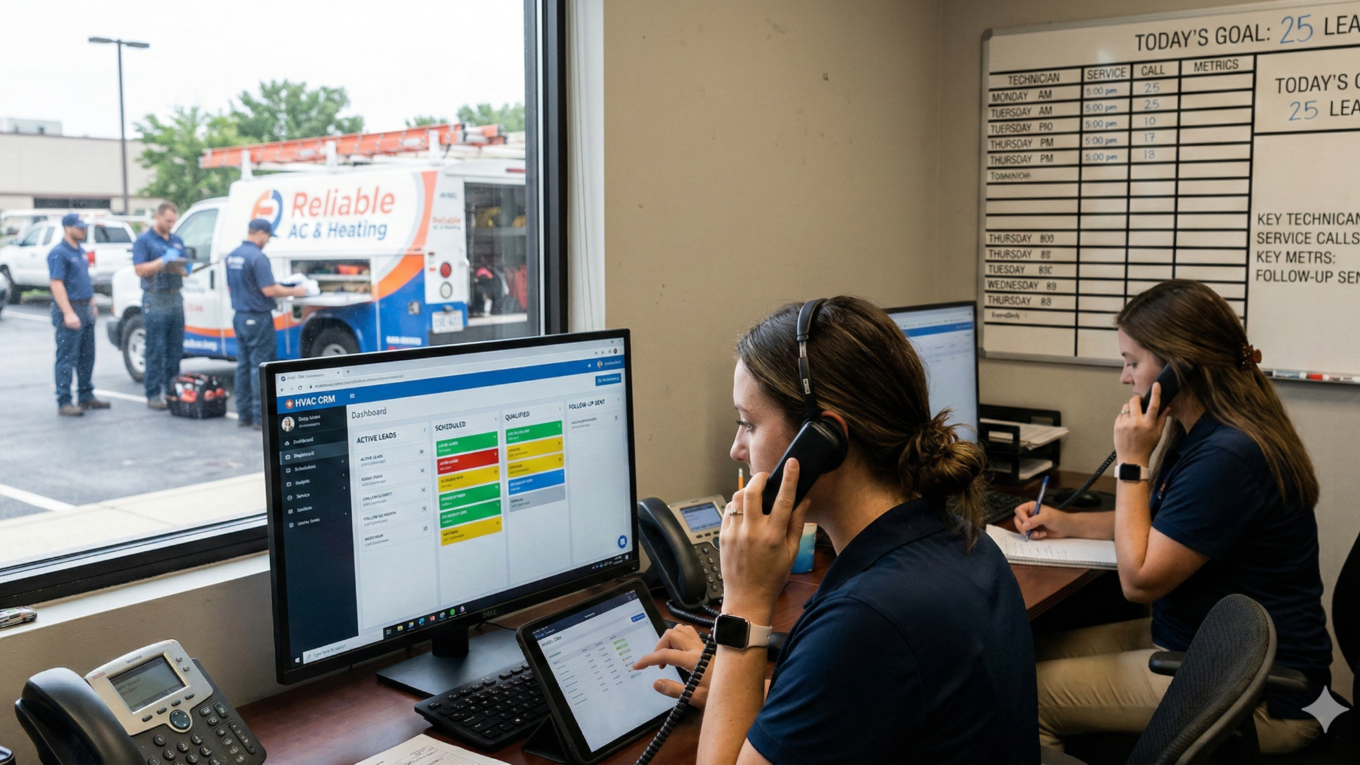
I’m sitting in a dispatch office right now watching a 12-truck HVAC company bleed leads during their busiest week of the year.
The phones ring after 6 PM—straight to voicemail. Mobile searchers land on a homepage with six different CTAs and no clear next step. Technicians come back saying “they just wanted a price” while the owner mutters that marketing doesn’t work.
This isn’t a marketing problem. It’s a funnel problem.
And I know what you’re thinking: Another consultant telling me to upsell everything. I get the skepticism. I spent years as a service manager watching good techs get burned out by quota pressure and homeowners get defensive before we even knocked on the door.
But here’s what changed my mind: when I started auditing dispatch-to-invoice funnels for trades businesses, I found that the companies homeowners actually trusted weren’t the ones with the smoothest sales pitch. They were the ones with the clearest systems—the ones that made the experience predictable, transparent, and low-pressure from the first phone call to the follow-up email.
That’s what a real air conditioning service sales funnel does. Not manipulation. Not artificial urgency. Just a structured path that qualifies leads, sets expectations, and converts the right customers while respectfully letting the wrong ones go.
The Mistake That’s Costing You 40% of Your Inbound Calls
Most HVAC companies think their funnel starts when the technician shows up.
It doesn’t.
It starts the moment someone searches “AC not cooling” on their phone at 9 PM. And that’s where the first leak happens.
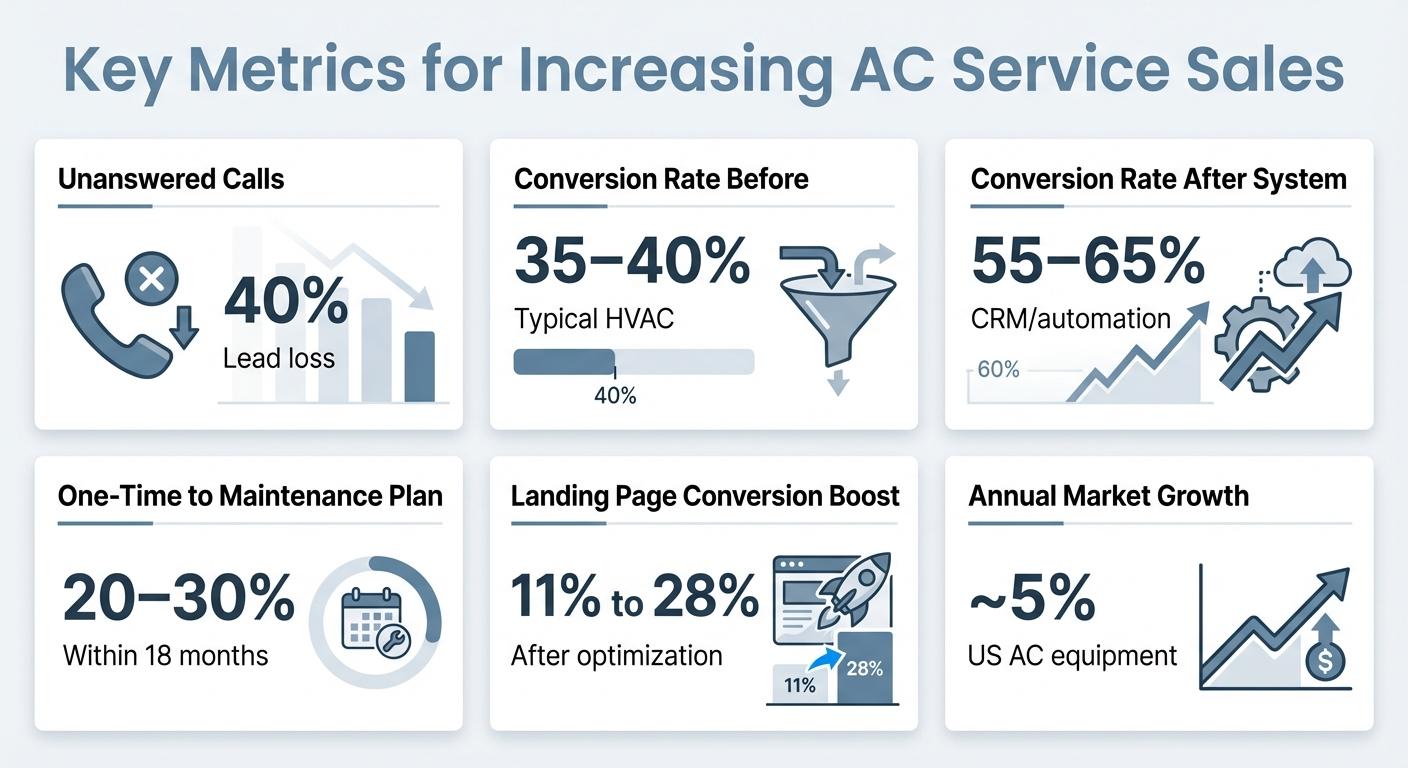
I pulled call logs for the company I’m auditing. Out of 127 inbound calls last week, 51 went unanswered. That’s 40% of potential revenue hitting a voicemail box that says “leave a message and we’ll call you back during business hours.” Except mobile searchers don’t leave messages—they call the next company in the Google results.
The ones who did reach a dispatcher got routed into a system with no lead qualification. No questions about urgency, budget range, or decision timeline. Just “we can get someone out Tuesday between 8 and 5.” Then the technician arrives to find a renter who can’t approve repairs, or a homeowner who wanted a free second opinion.
Your sales funnel isn’t a trick to close more deals. It’s a filter to stop wasting time on the wrong deals while giving the right customers a reason to choose you.
What a Transparent AC Service Funnel Actually Looks Like
In the real world, an air conditioning service sales funnel has three functional stages:
Stage 1: Capture and Qualify (First Contact to Scheduled Appointment)
This is where you separate urgent service calls from price shoppers and people who aren’t ready to spend. You’re not trying to close anyone yet—you’re trying to understand the problem and set expectations.
| Question | Purpose |
|---|---|
| What’s happening with your system right now? | Assess urgency and severity |
| When did you first notice the issue? | Determine if it’s progressive or sudden |
| Have you had any service done in the past year? | Identify maintenance history |
| Are you the homeowner or decision-maker? | Confirm authority to approve work |
| What’s your timeline—emergency or can it wait? | Prioritize scheduling appropriately |
These aren’t interrogation questions. They’re qualification questions that help you route the lead correctly.
Your CRM should capture these answers in tagged fields—not buried in a notes section. That way, when you’re reviewing your pipeline, you can see how many leads are actually qualified versus how many are tire-kickers who’ll never convert.
Stage 2: Diagnose and Present (Service Visit to Estimate Acceptance)
This is where trust gets built or destroyed.
The technician shows up, runs diagnostics, and presents options. But the customer is evaluating you as much as you’re evaluating the system.
They’re watching to see if you:
- Explain what you found in plain language
- Show them the problem (photos, readings, visual evidence)
- Offer a range of solutions, not just the most expensive one
- Give them time to think without hovering
I’ve watched techs lose $3,000 jobs because they launched into a repair pitch before the homeowner even understood what was wrong. And I’ve watched other techs close $8,000 replacements because they spent ten minutes walking through efficiency comparisons and financing options without any pressure.
The funnel stage here isn’t about closing—it’s about informed consent. When a customer says yes, they should feel like they made a smart decision, not like they got sold.
Stage 3: Close and Retain (Estimate Approval to Follow-Up)
Most companies think the funnel ends when the invoice gets paid.
That’s the biggest leak of all.
A homeowner who just spent $1,200 on a capacitor replacement is either going to become a maintenance plan customer and refer you to three neighbors, or they’re going to forget you exist until the next breakdown—and call whoever shows up first in Google.
This stage is where marketing automation and CRM actually earn their keep:
- A follow-up email two days after service asking if everything’s working
- A maintenance reminder six months later with a seasonal tune-up offer
- A winter prep checklist in November with a call-to-action to book before the freeze
The companies that do this consistently see 25–30% of one-time service calls convert into annual maintenance agreements. The ones that don’t are stuck in a constant churn of cold lead generation.
How Mobile Search Changed the Game (And Why Your Landing Page Matters More Than Your Truck Wrap)
Here’s a reality check: market projections show the U.S. air conditioning equipment market hitting $47.71 billion by 2031, growing at nearly 5% annually.
That growth isn’t coming from Yellow Pages ads. It’s coming from mobile searchers who need help right now and expect a frictionless experience.
When someone searches “AC repair near me” at 8 PM on a Tuesday, they’re hot, frustrated, and ready to book. But if they land on your homepage—with a generic hero image, five navigation links, and a “Contact Us” form that asks for their life story—they’re gone in 15 seconds.
Your landing page is the most important piece of your sales funnel, and it should do exactly one thing: get them to call or book online.
The Essential Elements of a Converting Landing Page
- A headline that matches their search intent (“Emergency AC Repair—Same-Day Service Available”)
- A single, obvious call-to-action above the fold (phone number that clicks to call on mobile, or a booking button)
- Social proof that reduces anxiety (reviews, certifications, “licensed and insured”)
- A brief explanation of what happens next (“We’ll diagnose the issue, explain your options, and give you a written estimate before any work begins”)
No blog links. No “About Us” story. No eight-paragraph explanation of your company values. Just a clear path from “I have a problem” to “I’m talking to someone who can solve it.”
I rebuilt a landing page for a client last spring. Same ad spend, same keywords. Conversion rate went from 11% to 28% in three weeks.
The only thing that changed was removing friction.
The CRM and Automation Stack That Prevents Leads From Falling Through the Cracks
Let me tell you what I see in most HVAC companies: a Google Sheet with customer names, a filing cabinet full of paper invoices, and a dispatcher who “just remembers” who needs a callback.
That system works until you hit 8–10 trucks. Then it collapses.
A real CRM isn’t about tracking every interaction for the sake of data. It’s about making sure nothing gets forgotten when you’re juggling 40 active jobs and 15 incoming calls a day.
The Minimum Viable Setup
Lead Capture
Every phone call, web form, and chat message goes into the CRM with a timestamp and source tag. You should be able to pull a report that shows how many leads came from Google Ads versus organic search versus referrals.
Qualification Fields
When the dispatcher takes the call, they’re filling in tags: urgency level, service type, decision-maker status, and estimated job size. This is how you prioritize your schedule and route the right tech to the right job.
Automated Follow-Up Sequences
When a lead books an appointment, they get a confirmation email with your tech’s name, photo, and arrival window. When the job is completed, they get a follow-up email asking for a review. When six months pass, they get a maintenance reminder. None of this requires manual effort once it’s set up.
Pipeline Visibility
Your dashboard should show you exactly where every lead is: how many are scheduled, how many estimates are pending, how many invoices are unpaid. If a lead sits in “estimate sent” for more than 48 hours without a follow-up, your system should flag it.
The companies I work with that implement this see their conversion rate climb from 35–40% to 55–65% within a quarter. Not because they got better at selling. Because they stopped losing track of people who were already interested.
What “Lead Qualification” Actually Means (And Why It Protects Both You and the Customer)
I need to address the elephant in the room: the fear that “qualifying leads” is just code for “only helping people who’ll spend a lot of money.”
That’s not what it means.
Lead qualification is about matching expectations. A renter who needs landlord approval before any work can start is a qualified lead—for a property management company, not for a residential HVAC contractor. A homeowner who wants a $50 diagnostic and plans to DIY the repair is a qualified lead—for a parts supplier, not for a full-service company.
When you try to serve everyone, you serve no one well.
How to Qualify Without Being Pushy
“Just so I can get you to the right person, can I ask—are you looking for a repair estimate, or are you thinking it might be time to replace the system?”
“Got it. And are you the homeowner, or will someone else need to approve the work?”
“Okay, and what’s your timeline—is this something that needs to happen this week, or are you planning ahead?”
These questions don’t pressure anyone. They clarify intent. And when you route leads correctly, your close rate goes up and your customer satisfaction goes up.
The service market growth reflects this shift—customers increasingly value preventive maintenance that keeps systems running efficiently, not just emergency repairs. When your funnel aligns with that preference, you’re not fighting customer resistance—you’re meeting an existing demand.
The Follow-Up Sequence That Turns One-Time Callers Into Long-Term Customers
Most HVAC companies are sitting on a goldmine: their existing customer list.
You’ve already earned someone’s trust enough that they let you into their home and paid you for a service. But then you never contact them again until they call you in a panic two years later?
That’s leaving money on the table.
A Simple Email Sequence That Works
| Timeline | Message | Goal |
|---|---|---|
| Day 2 Post-Service | “Hi [Name], just checking in to make sure everything’s running smoothly after our visit. If you have any questions, reply to this email or give us a call.” | Build trust and catch issues early |
| Month 6 | “It’s been six months since we serviced your system. Spring/fall is a great time for a tune-up to catch small issues before they become expensive repairs. Book online or call to schedule.” | Convert to preventive maintenance |
| Month 11 | “Your system is coming up on a year since our last visit. Want to get on our annual maintenance plan? You’ll get priority scheduling, discounted repairs, and two tune-ups per year for one flat rate.” | Secure recurring revenue |
This isn’t aggressive. It’s helpful. And it works because you’re reaching out at natural decision points.
The companies that do this consistently see 20–30% of their service customers convert to maintenance plans within 18 months. That’s recurring revenue, predictable scheduling, and customers who trust you enough to call you first when something goes wrong.
For strategies on building this kind of long-term pipeline, check out proven approaches to hvac lead generation that prioritize relationship-building over one-time transactions.
Why “Just Change the Capacitor Yourself” Comments Miss the Point
I see this all the time: someone posts about a $400 service call, and twenty people jump in saying “that’s a $15 part, you got ripped off, just DIY it.”
And look—I’m not going to pretend every service call is priced fairly. There are absolutely companies that gouge people.
But the comment misses the bigger picture.
What You’re Actually Paying For
When a homeowner calls an HVAC company, they’re not just buying a part. They’re buying:
- Diagnostic expertise to confirm that a bad capacitor is actually the problem
- Liability coverage if something goes wrong during the repair
- A warranty on the work
- The time savings of not spending their Saturday troubleshooting
A transparent sales funnel makes this value clear before the technician shows up. Your landing page, your booking confirmation, your pre-service email—they all set the expectation that you’re providing a professional service, not just swapping a part.
And when you do that well, the customers who just want the $15 part will self-select out. The customers who want peace of mind and a guaranteed fix will book with you—and they won’t flinch at a fair price because they understand what they’re paying for.
What to Do Right Now (Even If You Don’t Have a CRM Yet)
If you’re reading this and thinking “I need to overhaul everything,” stop.
You don’t.
Start with the biggest leak in your funnel and fix that first.
For most companies, it’s one of three things:
Leak 1: Unanswered Calls
Set up an after-hours answering service or a call routing system that forwards to a dispatcher’s cell. Track your answer rate for two weeks. If it’s below 80%, that’s your priority.
Leak 2: Vague Landing Pages
Pick your top keyword (probably “AC repair” + your city) and build one focused landing page with a single call-to-action. Run your Google Ads to that page instead of your homepage. Measure the difference.
Leak 3: No Follow-Up
Start with a manual process. After every completed job, send a follow-up email within 48 hours. Use a template, personalize the name, and ask if everything’s working. Track how many people respond or book additional services.
Fix one leak, measure the impact, then move to the next.
You don’t need a perfect system on day one. You need a system that’s better than “winging it and hoping people call back.”
The goal isn’t to become a marketing automation expert. The goal is to stop losing customers who were already interested—and to build a pipeline that feels predictable for them and profitable for you.
Because when your funnel works, nobody feels pressured. The right customers move forward with confidence, and the wrong ones move on without wasting anyone’s time.